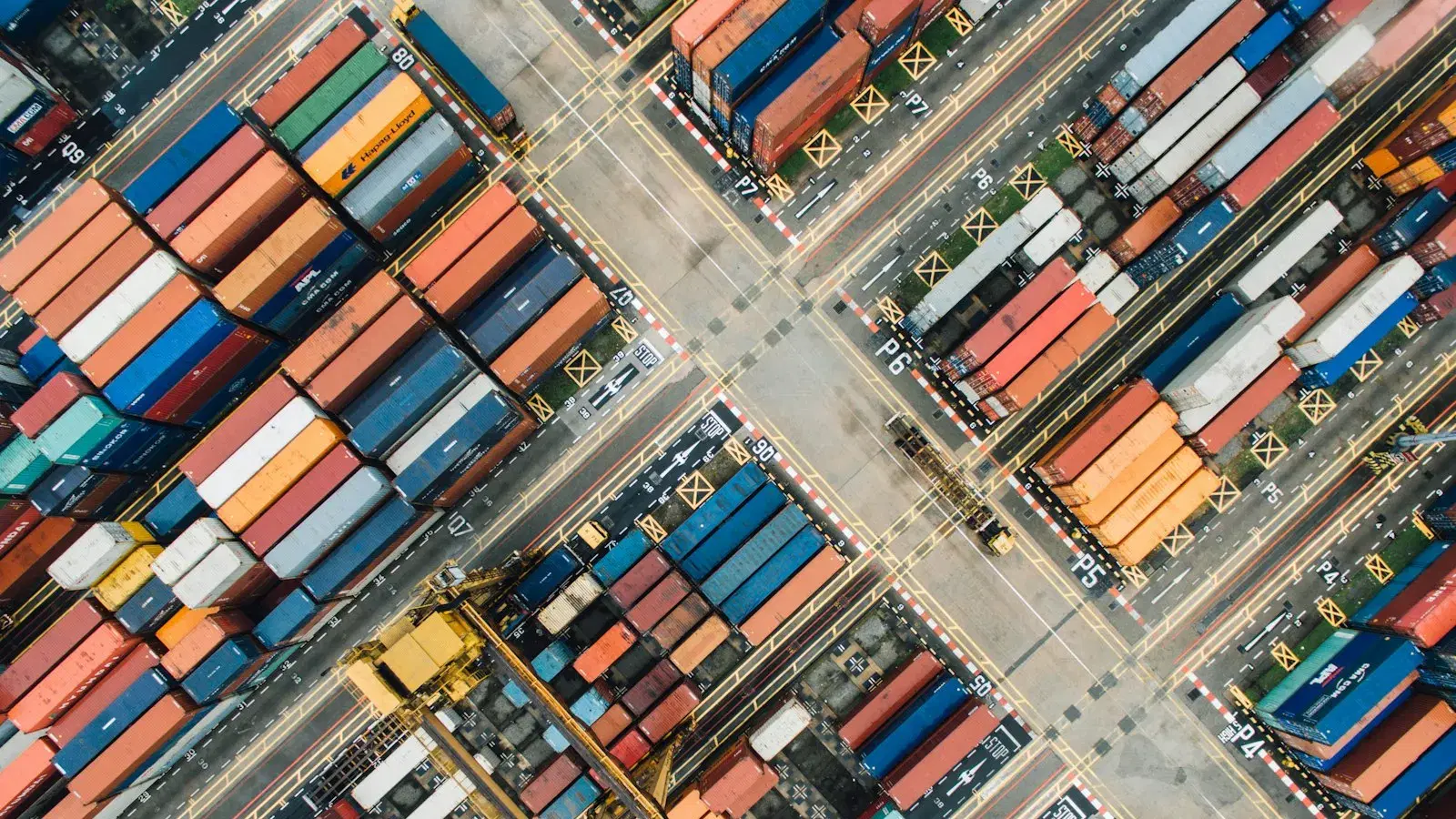
The paperwork moves slower than the freight.
iLeaf builds procurement, inventory and network automation for organisations moving physical things at scale. The work includes a long-term engineering partnership with one of the world's largest shipping and logistics companies, modernising core procurement and material movement — replacing manual data entry with AI-integrated workflows for invoice matching and vendor communication. The same practice built AIMS, a survey-driven field application for CALM IPSUM Group LTD in the UK, used to inspect water-authority assets — pipe bridges, CSO chambers, penstocks and detention tanks — offline-first, with queued sync and role-based dashboards from site stock to national procurement.
Ask Lia about logistics & supply chainWhat this includes
- Procurement optimisation
- Large-scale procurement and material logistics, where the bottleneck is approval and reconciliation rather than transport.
- Invoice & document matching
- Automated three-way matching across purchase orders, receipts and invoices, with exceptions routed to a person.
- Field-audited inventory
- Survey-driven applications that connect what is actually on site to what the supply chain believes is there.
- Vendor communication agents
- Chasing, confirming and escalating with suppliers — the correspondence that consumes a procurement team's week.
- Network process automation
- Operational control across large distributed networks, where a change in one depot has consequences three hops away.
- Offline-capable mobile
- Depots, yards and rural routes lose signal. The application keeps working and reconciles when it returns.
How we run it
Every phase ships something usable on its own, so you are never holding a half-finished system waiting on the next milestone.
Automate the reconciliation, not the judgement
Matching and chasing are mechanical and worth automating outright. Whether to accept a short delivery is a commercial decision and stays with a person.
Assume the network is unreliable
Field software that requires connectivity gets abandoned in the first week. Offline-first is a starting assumption, not a later feature.
Fit the systems already running
The ERP is not being replaced. Integration is the work, and it is planned as the work rather than treated as a final step.
Exceptions are the product
Anyone can automate the clean case. The value is in how the awkward 8% is surfaced, explained and handed over.
What we build it with
- Python
- Kotlin
- Swift
- PostgreSQL
- ERP integration
- Document AI
- Offline sync
- Agentic workflows
- REST / GraphQL
- Azure
- Power BI
- OpenTelemetry
Questions we get asked
Do you have real logistics and supply chain experience?
Yes. iLeaf runs a long-term engineering partnership with one of the world's largest shipping and logistics companies, modernising core procurement and material movement workflows with AI-integrated automation for invoice matching and vendor communications. The same practice built AIMS for CALM IPSUM Group LTD in the UK — a survey-driven field application for water-authority asset inspection, working offline and syncing when a signal returns.
Can this work with our existing ERP?
That is the normal case. Almost no logistics operator wants to replace a working ERP, so the automation sits alongside it and integrates through whatever interfaces exist — including older ones. Integration effort is scoped explicitly at the specification stage rather than discovered during build.
What happens when drivers or surveyors lose signal?
The application keeps working. Field software is built offline-first because depots, yards and rural routes routinely have no connectivity, and anything that stalls without a network gets abandoned by the people meant to use it. Data reconciles when the connection returns, with conflicts surfaced rather than silently resolved.
Let’s talk about logistics & supply chain.
Tell us what you are running and what it needs to do next. We will tell you honestly whether we are the right team for it.