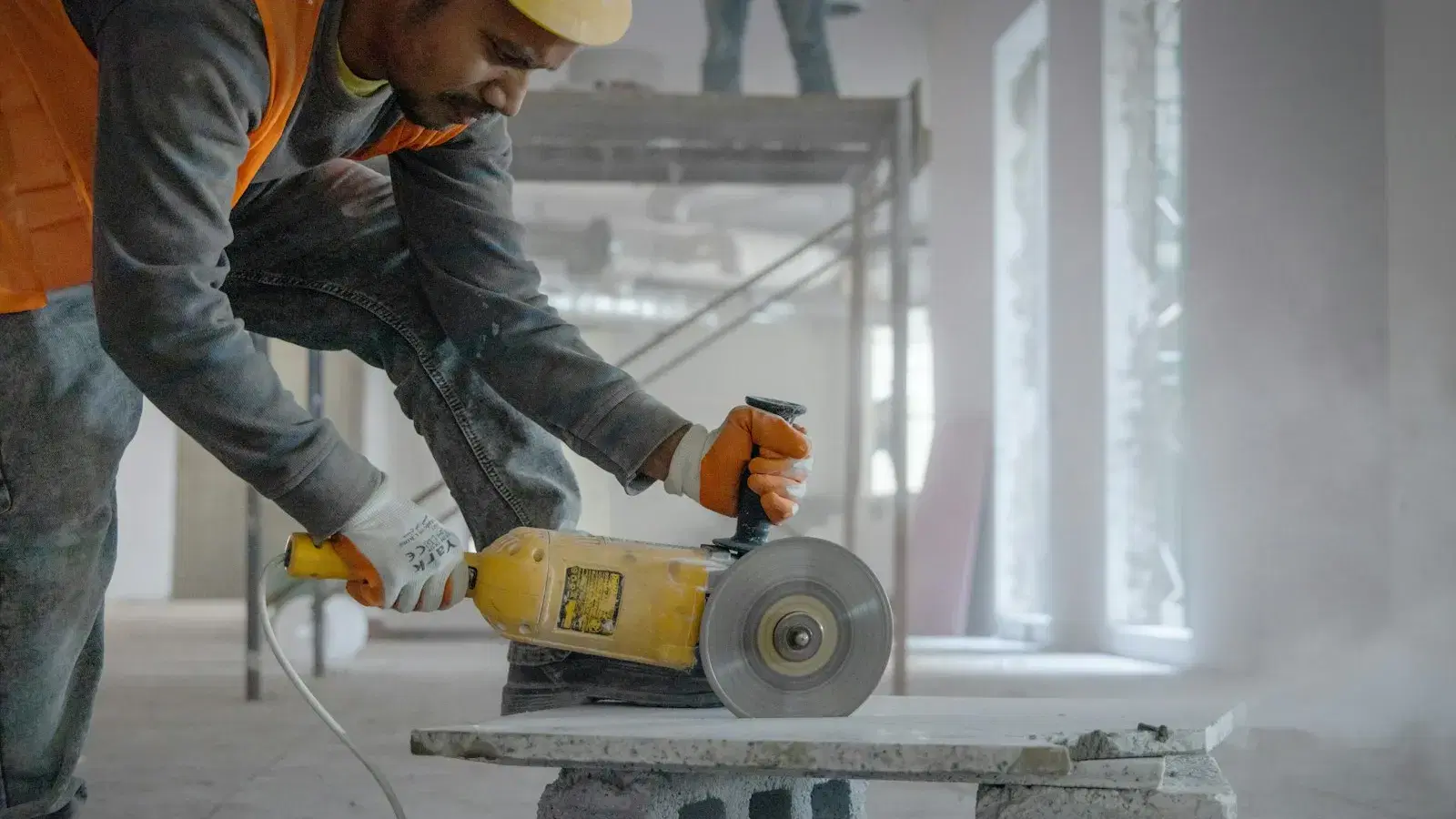
In high-risk industries, the question that matters is whether the person about to operate that machine is currently certified to operate it. It sounds like a question a system should be able to answer instantly. In most organisations it takes days.
Not because nobody is tracking it. Because everybody is — in a training system that does not talk to the safety system, on a spreadsheet held by a site manager, and in a folder of scanned certificates that somebody has to open one at a time.
The Challenge
Organisations operating in construction, energy, transportation and manufacturing were managing workforce training, safety processes and equipment compliance through disconnected systems and manual workflows. Data sat across tools, spreadsheets and paper-based processes, which limited visibility and made regulatory readiness a scramble rather than a state.
The specific problems the client brought to us:
- Fragmented systems with no single view of workforce competency
- Manual tracking of certifications and expiry dates, which meant expiries were discovered rather than anticipated
- Delayed incident reporting, because reporting a hazard meant finding a form and someone to give it to
- Reactive equipment maintenance, with compliance established after a failure rather than before
- No centralised compliance reporting, so every audit became a data-gathering project
The common thread is that none of this was a training problem or a safety problem in isolation. It was that competency, safety and equipment compliance are one question in practice and were three systems in software.
What We Built
A cloud-based EHS workforce compliance and training platform, unifying training, safety operations and compliance tracking into a single scalable system.
Learning management. Courses, tests, multimedia learning and certification tracking — the training half of the problem, but held in the same system as the compliance half so that completing a course updates competency rather than producing a certificate someone must file.
Role-based training matrix with automated recertification alerts. Competency requirements defined by role, so the system knows what each person must hold, and raises the expiry before it happens rather than reporting it afterwards.
Digital safety inspections, hazard reporting and mobile workflows. Reporting moved to where hazards are actually observed. A hazard that takes thirty seconds to report from a phone on site gets reported; one that requires a form back at the office frequently does not.
Equipment inspection, maintenance tracking and audit logs. Asset compliance held alongside workforce compliance, because a certified operator on uncertified equipment is not a compliant operation.
Executive dashboards with drill-down compliance reporting. Audit-ready reporting as a standing state rather than a periodic exercise — the difference between answering an auditor's question and preparing for it.
The Approach
The design principle was that competency, safety and equipment are one dataset. Most products in this space started as one of the three and grew towards the others, which is why they integrate awkwardly. Building it unified from the start is what makes the executive dashboard meaningful, because every number on it comes from the same source of truth.
The second principle was that anything requiring a desk would not be used. Inspections, hazard reports and equipment checks happen on site, so the mobile workflows were built as the primary path rather than a companion to a web application.
The Result
The platform improved workforce competency visibility, reduced administrative workload, enabled faster safety reporting, improved coordination between training and operations, and supported better compliance decision-making.
It supports large-scale deployments across North America and Africa, with thousands of users across multiple sites and high-volume regulatory workflows in construction, energy, transportation and manufacturing.
The platform was custom-developed with full IP ownership retained by the client. iLeaf provided product engineering, system architecture, LMS development, safety workflows, equipment compliance modules, cloud deployment, integrations and ongoing technical support.
If you are reconciling competency and compliance across more than one system, that is the problem this was built for — tell us what you are running, or read more about how we work with construction and field operations.
Have a system that needs to do this?
500+ systems shipped since 2011, and we still maintain most of them. Tell us what you are trying to move.