Energy
ARMO: Augmented Real-Time Monitoring for Underground Infrastructure
Prepared by Sarvanan C
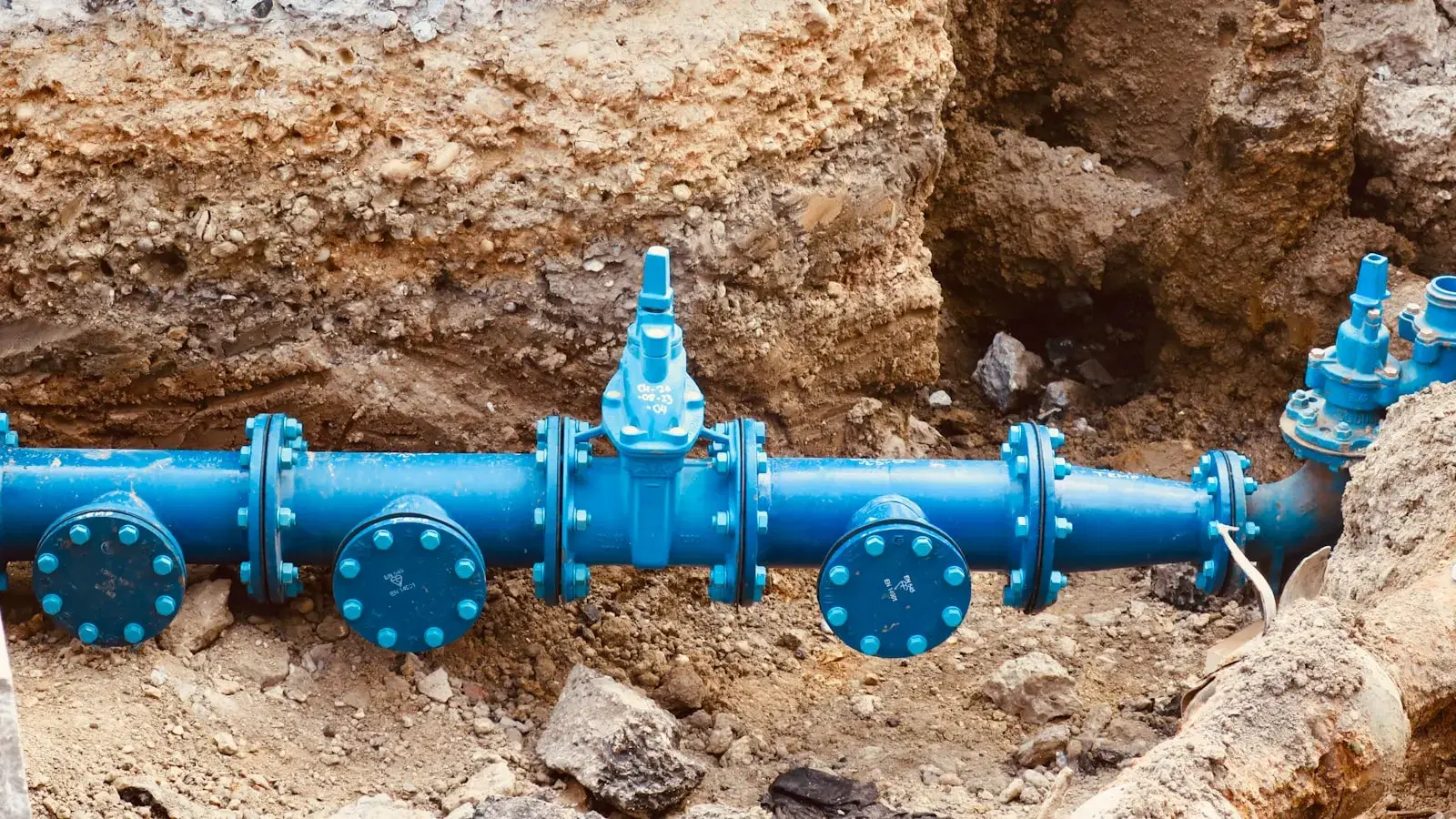
The difficulty with underground infrastructure is that it is underground.
A water main develops a fault. Nobody knows until pressure drops, a road subsides or a customer calls. By then the question has stopped being "is there a problem" and become "where exactly, and how much of this street do we open to find it".
ARMO — Augmented Real-Time Monitoring — was built for that gap: a real-time monitoring system with predictive analytics and an integrated mobile application, giving technicians a 3D rendering of pipeline sections and an augmented view of what is beneath them.
The Challenge
Buried networks are inspected on a schedule and diagnosed after failure. That produces two costs simultaneously — money spent inspecting assets that are fine, and emergency response to assets that were not.
The specific difficulties:
- No live condition data. Sensing exists at treatment and pumping points, rarely along the run.
- Location is approximate. Records are often decades old, and the pipe is not always where the drawing says.
- Diagnosis requires excavation, which is the most expensive possible diagnostic step.
- The technician is not always local, so response time includes finding the site before finding the fault.
What We Built
ARMO has two halves that work as one product.
The ARMO system — sensing nodes combining sensors, power controllers, a battery management system, a processing unit and cloud connectivity. The deployed sensor set covers pH, turbidity, slime, flow and power failure, and is extended per site: the sensor mix is a function of the infrastructure and the client's requirements rather than a fixed bill of materials.
Energy harvesting is part of the node design. Sensing hardware buried along a pipeline route cannot be on a maintenance cycle for battery replacement, because the access cost is the thing the product exists to avoid.
The ARMO mobile application — the augmented view. Data from the sensing network builds an augmented map of the pipeline, showing current status in place, and highlighting potential, defective or damaged sections for immediate attention.
The workflow the product is built around runs in four steps: an anomaly is detected and an alert sent; the error report is diagnosed; the defective spot is identified on the app; and the technician is navigated to the exact location.
That last step is the one that changes the economics. Knowing there is a fault is useful. Being taken to it, with the pipeline rendered in place, is what removes the exploratory excavation.
The Approach
The system is dynamic rather than fixed to one asset class. The same architecture is applied to water, sewage, gas and network pipelines, customised to terrain and infrastructure — which matters because most operators run more than one kind of buried asset and do not want a separate product for each.
Predictive analytics runs over collected data to anticipate breakage, leakage, contamination, denting and corrosion, rather than only reporting them. The alerting is directed: the department, the affected users and the assigned technician are each notified, because a system that alerts everyone equally is one whose alerts get ignored.
Who It Is For
ARMO was designed around four operator types with the same underlying problem:
- Government electric and water authorities
- Oil and gas companies
- Waste management companies
- Network companies
What they share is a large buried estate, expensive access, and consequences that escalate quickly once a fault surfaces.
The Result
ARMO delivers time and cost savings, location accuracy, faster response, improved safety, IoT integration and continuous data collection — with adoption deliberately kept simple, because a monitoring product that requires retraining a field workforce does not get deployed at scale.
ARMO sits within iLeaf's energy and field operations practice, which began with oil and gas and now covers asset monitoring across utility and network infrastructure. Talk to us about what you are running.
Have a system that needs to do this?
500+ systems shipped since 2011, and we still maintain most of them. Tell us what you are trying to move.