The Hidden Inefficiencies in Phone-Based Customer Operations And How AI Voice Agents Automate 70% of Business Workflows
Introduction
Phone support remains the most critical communication channel for businesses. Customers still prefer calling when they need clarity, urgency,or immediate assistance. But behind these interactions lies an operational model that is expensive,inconsistent,and difficult to scale.Even with IVR,PBX,and call centers,most organizations suffer from inefficiencies that slow down service,drain resources,and limit growth.Modern AI Voice Agents now automate up to 70% of routine workflows,helping companies streamline operations and deliver faster support.
The Reality of Phone-Based Customer Operations Today
For decades,businesses relied on human phone agents to manage:
- Customer support
- Appointment scheduling
- Order tracking
- Billing reminders
- Lead qualification
- Feedback collection
- Basic inquiries
As customer expectations rise and call volumes increase,most organizations face four major challenges:
- High operational costs
Hiring, onboarding, training, and retaining agents is expensive, especially for 24/7 operations. - Response time inconsistency
Wait times vary depending on staffing, peak hours, and availability, affecting customer satisfaction. - Quality and accuracy inconsistencies
Fatigue,context switching,and human error lead to missed details and uneven communication. - Lack of process visibility
Traditional phone systems offer limited insights into call outcomes,customer sentiment,or workflow bottlenecks.
The Hidden Inefficiencies No One Talks About
Even well-run call centers carry inefficiencies that compound over time. Most leaders underestimate these gaps because they appear in daily operations.Below are the hidden inefficiencies that Voice AI directly addresses:
1. Repetition of routine conversations
Up to 65–75% of calls involve:
- Booking or rescheduling
- Checking order/delivery status
- Asking for basic information
- Requesting updates
- Filing repetitive queries
2. Manual data entry after every call
Agents must update:
- CRM entries Notes
- Tickets
- Follow-up tasks
- Customer history
3. Missed follow-ups
Customers often require:
- Payment reminders
- Appointment confirmations
- Delivery follow-ups
- Support escalations
4. Limited capacity during peak hours
Human teams cannot scale instantly during :
- Seasonal peaks
- Sale/offer periods
- Emergencies
- Sudden demand spikes
5. Quality variation across agents
Experience and performance fluctuate due to:
- Training differences
- Stress
- Fatigue
- Knowledge gaps
6. Narrow integration across systems
- Agents manually switch between CRM,tickets,billing,logistics,calendars,and ERP tools,slowing down workflows.
How AI Voice Agents Solve These Challenges
Modern Voice AI now combines:
- Real-time speech-to-text
- Intent detection
- Decision engines
- Natural-sounding voice synthesis
- CRM, ticketing, calendar, and payment integrations
- Adaptive dialogue and reasoning
This enables Voice AI to manage complete end-to-end workflows.
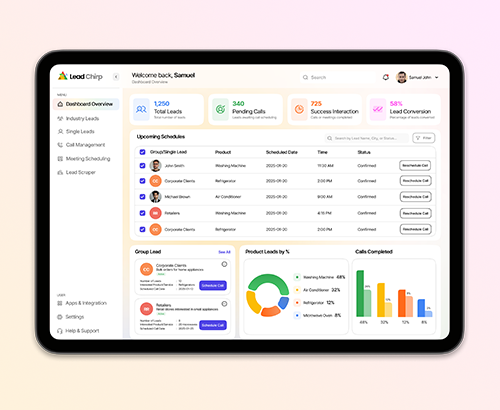
Workflow Automation Powered by Voice AI
1. Appointment Scheduling & Calendar Management
The AI can:
- Check availability
- Propose slots
- Book or reschedule appointments
- Send confirmations
- Update internal calendars
- Trigger reminders
2. Lead Qualification with Proven Models
Voice AI can qualify leads using structured frameworks such as:
- BANT (Budget, Authority, Need, Timeline)
- MEDDIC/MEDDPICC
- CHAMP
- GPCTBA/C&I
The AI asks relevant questions,evaluates responses,scores the lead,and updates the CRM automatically.
3. Customer Support and Issue Resolution
AI Voice Agents resolve common queries such as:
- FAQs
- Order updates
- Service disruptions
- Troubleshooting
- Refund/return policy information
- Complex issues are escalated with full context.
4. Payment and Billing Automation with Live Payment Links
The AI can:
- Call customers for pending payments
- Send secure payment links via SMS/WhatsApp/email
- Confirm payments in real time
- Update billing/CRM systems
- Trigger next steps like order confirmation or service activation
5. Order Tracking & Logistics Queries
AI retrieves information from OMS/logistics systems and provides:
Real-time order status
- Tracking links
- Delivery timelines
- Address update support
- Delivery issue assistance
6. Feedback Collection & Surveys
Voice AI conducts surveys using:
- CSAT
- NPS
- Post-purchase feedback
- Service quality ratings
Why Voice AI Delivers 70% Automation Across Workflows
Voice AI automates because it offers:
- 24/7 availability
- Consistent accuracy
- Instant system access
- Zero manual logging
- Scalability across thousands of calls
- End-to-end task completion
Organizations typically automate:
- 70% of appointment workflows
- 60–80% of payment reminders
- 50–70% of support queries
- 80–90% of feedback calls
- 45–65% of lead qualification
The Operational ROI of Voice AI
Companies using AI Voice Agents experience:
- Reduced cost per call
- Faster resolutions
- Shorter queue times
- More accurate customer data
- Higher conversion rates
- Better workforce allocation
- Improved CSAT and NPS
- Consistent service quality
Voice AI doesn’t replace humans,it supports them. AI handles repetitive workflows while humans handle complex or emotional scenarios.
Conclusion
Phone-based customer operations are essential but burdened with inefficiencies. AI Voice Agents automate most routine workflows, improve accuracy,reduce costs,and enable consistent 24/7 service. With intelligent reasoning,deep integrations,real-time payment handling, and workflow automation,Voice AI is redefining how businesses communicate and operate at scale. Early adopters gain a competitive advantage through precision,CX improvement,and measurable ROI.

.jpg)