Why Having a CLM System Is Not Enough Anymore AI Is Not the Solution.
.jpg)
Introduction
Most organizations today already store contracts digitally in some form. But even with a CLM system in place, many teams still deal with delays, scattered communication, and manual follow-ups during the contract process.The challenge is no longer just about storing contracts.It’s about how contracts move across teams, approvals, and workflows.
The Real Problem:
In many organizations, parts of the process still happen outside the system.Teams continue using emails, spreadsheets, shared folders, and manual reminders to keep things moving.
As a result:
-
Visibility becomes difficult
-
Approvals take longer
-
Tracking status gets confusing
-
Follow-ups increase
-
Information becomes scattered across teams
Over time, this creates workflow gaps and slows down operations.
Why Workflow Visibility Matters:
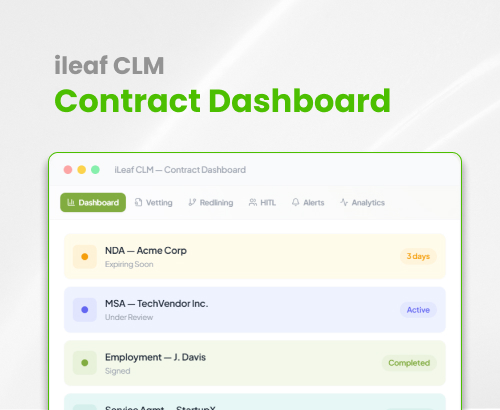
A CLM system should do more than act as a contract repository.
It should help teams:
-
Clearly see contract status
-
Collaborate more easily
-
Reduce manual coordination
-
Track approvals and renewals
-
Keep workflows connected in one place
When teams have better visibility into the process, contracts move faster and with fewer delays.
The Next Phase of CLM:
Organizations are now looking beyond simple contract storage.The focus is shifting toward connected workflows, better collaboration, and making contract data more useful across the business.Because real value comes from how the system supports day-to-day operations, not just where documents are stored.
Conclusion:
Modern contract management is becoming more workflow-focused than ever before.The goal is not just to manage contracts digitally, but to make the entire process simpler, more visible, and easier for teams to work with every day.Because when contract workflows move better, everything around them moves better too.